Showing posts with label farming. Show all posts

Sunday, 3 November 2019

Kelvin Park, Bringelly, NSW

Kelvin Park Farm Group

The Retreat, Kelvin Park Drive, Bringelly, NSW.
Lot 271  Vol  803167
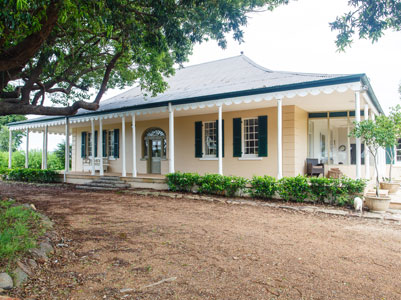
Kelvin Park Homestead c.2010  (australiancountry.net.au)

History and Description
The Kelvin Park Group is part of a 600 acres "Bringelly" land grant originally granted to Thomas Laycock Jnr. He came to Australia with his father, Sergeant Thomas Laycock of the NSW Corps in 1789. Thomas Jnr became a Lieutenant in 1802, left the colony in 1810 and fought for England in the American War of 1812, becoming a Captain. On his return to Australia with his family in 1817 he received the Bringelly grant in 1818. He had the main homestead and surrounding outbuildings of Kelvin Park constructed c.1820. He died here in 1823 and by 1824 the property was bought by J T Campbell former secretary to Governor Macquarie. In 1825 the property was leased by the Australian Agricultural Company.

Kelvin Park was purchased by Alfred Kennerley in 1833, later premier of Tasmania. He lived there until 1856, during this time the double gabled brick coach-house was constructed, c.1851.

Since the mid-19th century the property has had various owners. The group is presently privately owned and occupied.

See also SHI 1970119 (Homestead), 1970139 (Kitchen, former), 1970157 (Staff/Shearer's quarters), 1970164 (Coach House, former), 1970167 (Farm Shed), 1970177 (Farm Shed), 1970445 (Relics) and 1970446 (Site Landscaping). (State Heritage Inventory)


Condition and Use
The buildings are intact, and have a high degree of integrity

The current use is a private residence. Its former use was a Homestead complex, part of working farm (State Heritage Inventory)


Heritage significance
The Kelvin Park Group is an intact complex of early Colonial farm buildings within an attractive, mature garden in a rural hilltop setting. The earlier buildings include an excellent example of an 1820s homestead and associated outbuildings in the form of timber slab sheds. The complex also retains additional relics and structures illustrative of the original functioning of the property. There is the potential to gain more information on the site from further architectural, archaeological and documentary research. (State Heritage Inventory)

Heritage ListingLiverpool LEP 0252
State Heritage Inventory


Read more about the Kelvin Park Farm Group Click here

Thursday, 22 December 2016

Menangle Rotolactor

Menangle Rotolactor


The rotolactor was a piece of industrial modernism introduced at Camden Park in 1952 by Edward Macarthur Onslow.


The idea came from the USA in the 1920s and the first rotolactor was built in New Jersey shortly after then.


Construction started in 1950 and completed in 1952. It had a capacity of 1000 cows a day and could milk 50 cows a day on a rotating platform.


The rotolactor was a huge tourist attraction for Menangle with up to 2000 visitors a week.


The rotolactor suffered from technical problems and closed in 1977. It opened shortly after this but finally closed down in 1983.

Menangle Rotolactor on Camden Park closed in 1977 and was a huge tourist attraction to the village (Camden Images)

This postcard from the collection of the Camden Museum shows the view scene by a visitor the facility. (Camden Images)

Reference:

Brian Walsh, Milk and the Macarthurs the dairy history of Camden Park, Camden: Belgenny Farm Trust, 2016

Saturday, 9 April 2016

Camden Vale Milk Depot

Camden Vale Milk Depot/Old Dairy Farmers Co-op Depot
11 Argyle Street Camden

Lot 1, DP 219757


Camden Vale Milk Depot/Dairy Farmers Milk Depot c1970s (Camden Images)

History and Description


The foundation stone was laid in 1926 by Mrs F.A. Macarthur-Onslow, Mayoress of Camden and wife of Camden Vale Milk Co Ltd. The name was later changed to Dairy Farmers Co-operative Milk Co in 1928. They operated the factory until the 1970s.(SHI)

Condition and Use


The Old Dairy Farmer's Co-op Depot has poor to fair integrity and intactness. (SHI)

Heritage Significance


An early dairy of the Camden Vale Milk Co Ltd (later changed to Dairy Farmers). (SHI)

Heritage Listing


Camden Heritage Inventory LEP 2010 Listing Item I3

State Heritage Inventory Built Commercial Listing

Read more


State Heritage Inventory Click here

Saturday, 2 January 2016

Orielton, Harrington Park, NSW


Orielton

179 Northern Road, Narellan, NSW 2567
Part Lot 7, DP 270613


Orielton Homestead c2000 (CamdenAdvertiser)


History and Description


Edward Lord was granted 655.5 hectares in the Parish of Narellan that he then named Orielton Park in about 1815.

In 1834 Orielton was noted in letters written by David Waugh as being a productive farm. By 1835, 93 hectares of Orielton Estate was amalgamated with the neighbouring Wivenhoe.

In 1847 it was purchased by John Perry who later subdivided a portion of the estate and leased the main property to Charles Thompson, Clerk of the Bench to Camden Court. During the whole of this early period the estate seems to have been used mainly for grazing, with some limited agriculture.

In 1863 Abraham Davy of Harrington Park purchased Lot 1 of Orielton Farm (24 hectares) from three Sydney businessmen who had earlier purchased the estate - John Lait of Sydney, James Ryan of Emu Plains and James Jones of Sydney.

During the early 1870s the sport of coursing (the pursuit of live hares by greyhounds across the countryside) was introduced to Orielton which became a popular activity at both the Orielton and Harrington Park estates. By the 1870s Harrington Park House had established a reputation as a gentleman's country seat, with "hospitality, picturesqueness and the hunt bringing interesting associations to the English eye".

In 1874, Harrington Park and Lot 1 of Orielton was purchased by William Rudd Snr, a grazier of Houtong Station in the Lower Murrumbidgee who changed the perceptions of Orielton and Harrington Park as a "gentleman's seat" to that of a graziers property. Rudd also gained control of the remaining parts of Orielton estate. Harrington Park and Orielton remained within the Rudd and Britton (descendant) families until 1933 when it was sold to Arthur and Elaine Swan. By 1938 the Swans has also purchased all the remaining parts of Orielton, and managed the two farms as a single entity.

During World War Two the Camden district was the scene of much military activity, and Orielton was occupied by the army for training and residential purposes. Since 1944 Orielton has been owned by the Fairfax family who also own nearby Harrington Park. The Fairfax family resided at Harrington Park, and Orielton was managed as part of the Harrington Park estate. The subdivision of Harrington Park in the 1990s for urban development has visually encroached upon Orielton estate, although the original grant and its management for grazing can still be understood in the broader landscape of the Narellan valley.

Homestead Group and entry drive:
The main homestead group focuses on the east and south with open rural land as its traditional address. The existing entry to Orielton follows the Old Northern Road easement in a north south direction curving sharply to the north west. At this point the drive is bordered by old pines and to the south is Narellan Creek. Towards the homestead group is evidence of previous hedges and remnant gardens formalised to the south. Located west of the main homestead is a dam. An old well structure remains near the top of the north ridge.

The homestead consists of an early building with a large complex of additions. To the east of the main house is the stables and horse agistment area. To the north of the stables is evidence of an earlier garden or entry that orientates to the east. (State Heritage Inventory)


Condition and Use

Former use was a farming estate, while current usages is a residence.

Orielton is rare as a relatively intact estate with its main homestead group still in its traditional rural context. (State Heritage Inventory)


Heritage Significance

Orielton: outline of significance:
- It still retains its quintessential landscape character - based on the traditional juxtaposition of homestead area, with its dominant garden, and cleared pastureland beyond;
- Its historical relationship to other nearby early grants (Harrington Park, Wivenhoe and Kirkham) and its place in the development of the local area can still be appreciated;
- It has associations with some notable people;
- The place retains its historical local prominence and serves as an important local landmark; (State Heritage Inventory)

Heritage Listing

Camden Local Environment Plan    No 48
State Heritage Register  No 01693

Read more on Orielton Homestead  Click here
Camden Heritage List Click here


Sunday, 4 October 2015

Historic Denbigh at Cobbitty

Open Day

The Denbigh Open Day is a rare opportunity to view one of the area's premier historic colonial properties. Denbigh was part of a land grant to Sydney merchant Charles Hook in 1812. The property was then sold in 1827 to 'The Galloping Parson" Rev Thomas Hassall.


Historic Denbigh at Cobbitty Open Day 10 October 2015.


The earliest part of Denbigh house was constructed by Hook in 1817 and added to by Thomas Hassall in 1838.

The State Heritage Inventory states:
The homestead is sited in contrast with the surrounding open agricultural land and is complimented by the half circle of hills which define Denbigh's landscape character. In terms of elevation and character, the buildings and trees have been sited in a manner influenced by John Claudius Loudon, the Scottish writer on landscape taste.

Read more

Read more on the State Heritage Inventory. Click here
View more images from the State Heritage Inventory. Click here

Thursday, 26 February 2015

Camden Show

Camden Showground c.1986  (Camden Images)


The Camden Show returns

The annual festival of farming returns the to the Camden Show ground at the end of March again. The show has been the most important country festival in the district for over 100 years. In the early days it was a celebration of agricultural modernism, by the inter-war period it had matured into a permanent part of the local landscape. The Second World War and the poor state of show finances saw the show disappear for the duration of the conflict. It is now strong than ever and not to be missed on Friday 20 March and Saturday 21 March 2015.

Read more @ http://www.dailytelegraph.com.au/newslocal/macarthur/camdens-favourite-show-returns/story-fngr8h70-1227240262212 

Guess who you meet at the show, the Premier


Historical society members meet the Premier 
It is amazing who you bump into at the Camden Show. Historical society volunteers John Wrigley OAM, Bettie Small PHF and Len Channell, with Peter Hayward in the background, greeted Premier of New South Wales, the Hon. Barry O'Farrell, the Member for Camden, Mr Chris Patterson, MP, and Camden Mayor,  Clr Lara Symkowiak. The dignitaries just walked into the pavilion to look at the arts and crafts put in by competitors and who should they meet but the enthusiastic members of the historical society. The encounter didn't phase society members one bit and they just took it all in their stride. Usually volunteers just meet friends they have not seen since last years show and this was a real surprise. The historical society has been fortunate to be able to have a stall in the show pavilion for many years. It has been located in amongst the cakes, flowers, sewing, knitting and other rural crafts.  The stall sells the latest publications, takes new memberships and renewals and answers lots of local history questions.


Mud and slush at the 2014 Camden Show (I Willis)

Mud and Slush 

The 2014 Camden Show featured mud and storms as a special event. It rained on Friday afternoon with a thunderstorm that arrived around 4.00 pm from the south-west. It caught many people unawares and created a mud bath in many parts of the showground. It dumped about 15 mm in about an hour. On Saturday morning show officials were out and about puting down woodchip over the worst patches and straw on other patches. Patrons who wore boots were well prepared to walk around in the mud. On Saturday there was a steady rain from about 4.00 pm with a short storm that came in over the Burragorang Valley and Southern Highlands, and provided drizzle around right through the fireworks.

Aerial view of Camden Show (Camden Show Society)

Miss Camden Showgirl

The Miss Showgirl competition is in many ways an anachronism from the past. It has survived for over 45 years under the onslaught of feminism, post-modernism, globalization and urbanisation. A worthy feat indeed.
The competition is still popular and the local press are always strong supporters. Show time, the show ball and Miss Showgirl are representative of notions around Camden’s rurality. People use the competition as a lens through which they can view the past, including the young women who enter it. In 2008 Showgirl Lauren Elkins ‘was keen’, she said, ‘to get into the thick of promoting the town and its rural heritage’. Camden people yearn for a past when the primary role of town was to service the surrounding farmers and their needs. Miss Showgirl is part of the invocation of rural nostalgia.

Miss Camden Showgirls

1962 Helen Crace
1963 Helen Crace
1964 Sue Mason
1965 Barbara Duck
1966 Dawn Dowle
1967 Jenny Rock
1968 Heather Mills
1969 Michelle Cham
bers
1970 Joyce Boardman
1971 Anne Macarthur-Stanham
1972 Kerri Webb
1973 Anne Fahey
1974 Sue Faber
1975 Janelle Hore
1976 Jenny Barnaby
1977 Patsy Anne Daley
1978 Julie Wallace
1979 Sandra Olieric
1980 Fiona Wilson
1981 Louise Longley
1982 Melissa Clowes
1983 Illa Eagles
1984 Leanne Reily
1985 Rebecca Py
1986 Jenny Rawlinson
1987 Jayne Manns
1988 Monique Mate
1989 Linda Drinnan
1990 Tai Green
1991 Toni Leeman
1992 Susan Lees
1993 Belinda Bettington
1994 Miffy Haynes
1995 Danielle Halfpenny
1996 Jenianne Garvin
1997 Michelle Dries
1998 Belinda Holyoake
1999 Lyndall Reeves
2000 Katie Rogers
2001 Kristy Stewart
2002 Margaret Roser
2003 Sally Watson
2004 Danielle Haack
2005 Arna Daley
2006 Victoria Travers
2007 Sarah Myers
2008 Fiona Boardman
2009 Lauren Elkins
2010 Adrianna Mihajlovic
2011 Hilary Scott
2012 April Browne
2013 Isabel Head
2014 Jacinda Webster