Showing posts with label history. Show all posts

Sunday, 3 November 2019

Kelvin Park, Bringelly, NSW

Kelvin Park Farm Group

The Retreat, Kelvin Park Drive, Bringelly, NSW.
Lot 271  Vol  803167

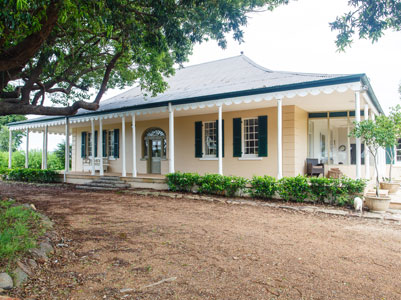
Kelvin Park Homestead c.2010  (australiancountry.net.au)

History and Description
The Kelvin Park Group is part of a 600 acres "Bringelly" land grant originally granted to Thomas Laycock Jnr. He came to Australia with his father, Sergeant Thomas Laycock of the NSW Corps in 1789. Thomas Jnr became a Lieutenant in 1802, left the colony in 1810 and fought for England in the American War of 1812, becoming a Captain. On his return to Australia with his family in 1817 he received the Bringelly grant in 1818. He had the main homestead and surrounding outbuildings of Kelvin Park constructed c.1820. He died here in 1823 and by 1824 the property was bought by J T Campbell former secretary to Governor Macquarie. In 1825 the property was leased by the Australian Agricultural Company.

Kelvin Park was purchased by Alfred Kennerley in 1833, later premier of Tasmania. He lived there until 1856, during this time the double gabled brick coach-house was constructed, c.1851.

Since the mid-19th century the property has had various owners. The group is presently privately owned and occupied.

See also SHI 1970119 (Homestead), 1970139 (Kitchen, former), 1970157 (Staff/Shearer's quarters), 1970164 (Coach House, former), 1970167 (Farm Shed), 1970177 (Farm Shed), 1970445 (Relics) and 1970446 (Site Landscaping). (State Heritage Inventory)


Condition and Use
The buildings are intact, and have a high degree of integrity

The current use is a private residence. Its former use was a Homestead complex, part of working farm (State Heritage Inventory)


Heritage significance
The Kelvin Park Group is an intact complex of early Colonial farm buildings within an attractive, mature garden in a rural hilltop setting. The earlier buildings include an excellent example of an 1820s homestead and associated outbuildings in the form of timber slab sheds. The complex also retains additional relics and structures illustrative of the original functioning of the property. There is the potential to gain more information on the site from further architectural, archaeological and documentary research. (State Heritage Inventory)

Heritage ListingLiverpool LEP 0252
State Heritage Inventory


Read more about the Kelvin Park Farm Group Click here

Thursday, 5 September 2019

Spring into artworks at Macaria

Spring Exhibition at Local Art Gallery


The Alan Baker Art Gallery in Macaria has launched a new exhibition for Spring 2019.

The exhibition has three themes:
1. Local Landscapes
2. Flora
3. A Model Wife: A Model Life.


1. Local Landscapes


Alan Baker's local landscape painting captured The Oaks and the surrounding area. Baker loved painting en plein-air with the breeze blowing in his face so he could feel the air around him and take in the environment.


Alan Baker landscape artworks at Macaria 2019 (I Willis)

2. Flora


The exhibition displays some of Alan D Baker's prolific flower artworks in his representational style.


3. A Model Wife: A Model Life.


Alan Baker's wife Marjorie, an artist in her own right, was his model, muse and wife. This exhibition investigates the role of the artist's model.

Alan Baker artworks of his wife Marjorie at Macaria 2019 (I Willis)


The exhibition also highlights the role of Rita Lee, one of Sydney's top artist models, who regularly worked with renowned artist Norman Lindsay. There is work by Lindsay on display.

The exhibition is part of the Unlock Camden open day at the Alan Baker Art Gallery at Macaria in John Street Camden.


Wednesday, 4 September 2019

Unlock The Past


Unlock Camden 2019

Camden's past is full of interesting stories about all sorts of things. What is the story of this picture? (Camden Images)

Tell us your story.


Be part of Camden’s Living History.

Camden Brass Band (Camden Images)


An appeal has been put out to the Camden community to tell people your story.

The easiest way it to use the hashtag #mycamdenstory on one of the many social media sites.

Visit the Camden Museum.


Camden Royal Hotel in Argyle Street Camden. (Camden Images)


Learn lots of stories about the past with the exciting displays and strange objects.

Experience Camden’s past, its stories, its characters and its wags. Immerse yourself in their stories.

Visit a local art gallery.


Macaria was once the offices of Camden Council and Camden Library and is now the Alan Baker Art Gallery. (Camden Images)


Learn stories told in pictures.


Local artists and others tell their own stories through sketches and painting.

Experience their world at Macaria – the Alan Baker Art Gallery in John Street Camden.

Talk to a volunteer of a local organisation.

Learn their story at their stalls in the forecourt of the Macaria in John Street Camden.


Listen to stories told in music from The Honeysippers – a bunch of local musicians.

All this is one local contribution to History Week 2019.


Monday, 25 December 2017

Whiteman's Commercial Building

Whiteman’s Commercial Building

76–100 Argyle Street 
Camden
Lot 1, DP 1027952


 Whitemans General Store 86-100 Argyle St. 1900s. CIPP


 History and Description

The Whiteman family conducted a general store in Argyle Street on the same site for over 100 years.

In 1878 Charles Thomas Whiteman, who operated a family business in Sydney bringing produce to Camden bought a single storey home at the corner of Argyle and Oxley Street and ran his store from the site. (SHI) In 1878 a fire destroyed the business.

CT Whiteman was previously a storekeeper in Goulburn and Newtown and later married local Camden girl Anne Bensley in 1872. Whiteman, was a staunch Methodist, and was an important public figure in Camden and served as the town’s first mayor from 1892 to 1894. 

CT Whiteman moving to premises in Argyle Street in 1889 occupied by ironmonger J.Burret and Whiteman modified the building for a shopfront conversion.   (SHI) 

The store was leased to Woodhill family from 1903 to 1906. 

The original Argyle Street building was an early timber verandahed Victorian and Federation period store. It was a two-storey rendered masonry building with hipped tile roof, projecting brick chimneys. The second storey had painted timber framed windows which were shaded by a steeply pitched tile roof awning supported on painted timber brackets.(SHI)

A two-storey addition was constructed in 1936 and the verandah posts were removed in 1939 when this policy was implemented by Camden Municipal Council.

Whiteman Brothers 86-100 Argyle Street in 1923 (Camden Images)


There were later shopfront modifications to the adjacent mid 20th Century facade street frontage which included wide aluminium framed glazing and awning to the ground level of the building. (SHI)

The business sold a variety of goods including menswear, haberdashery, ladieswear,  hardware, and produce and became one of the longest-serving in Camden. 

The premises were known as the Cumberland Stores from 1889 to 1940.

 In the 1940s the store supplied groceries, drapery, men’s wear, boots and shoes, farm machinery, hardware, produce and stationery. (Gibson, 1940)

FC Whiteman & Sons at 86-100 Argyle Street in 1978 (Camden Images)


The Whiteman’s Store was trading as Argyle Living when it closed in 2006 under the control of Fred Whiteman. The Whiteman family had operated a general store in Camden for 123 years. On the closure of Argyle Living the store sold homewares, clothing, furniture and a range of knickknacks and was the largest in Camden with 1200 square metres of space.


Argyle Living Shopping Bag from the last Whiteman's Store in Argyle Street Camden in 2006. (I Willis, 2017)


Condition and Use

Currently a commercial premises and arcade in Argyle Street Camden

Heritage Significance

The former site of Whiteman's store was one of the longest-serving businesses in the Camden district. The buildings are an important historical reminder of the growth and development of Camden township from its late Victorian period to the new beginnings of post-war Camden. (SHI)

FC Whiteman & Sons at 86-100 Argyle Street in 1995 (Camden Images)


Heritage Listing

Local Environment Plan                       Item 9
State Heritage Inventory NSW                   ID 1280144
Australian Heritage Commission        National Estate Database

Read more

Julie Wrigley, ‘Whiteman family’. The District Reporter, 8 December 2017.


Friday, 14 April 2017

Macarthur author researches the stories of local diggers from the First World War

Cover of Book by Lauren Hokin (L Hokin)

A local Macarthur author Lauren Hokin has just finished a major research and writing project on the First World War Anzacs of the Macarther region. 

Lauren Hokin writes about the First World War

Lauren writes about the impact of the First World War on the our region and why she decided to write about it:

The First World War devastated many communities throughout the country. And this was no different for the small rural population of what is now the Macarthur Region. The Great War was one of the most momentous incidences of recorded history, and a catalyst for much of the events of the 20th Century.
Thus, it has become an integral part of Australia's national narrative. Its impact on our history, society and culture cannot be denied and must be understood if we are to know who we think we are. 
The sacrifice of so many who left for the battlefields and those who gave everything on the home front must be remembered and commemorated. However, with the passage of time, the names and stories of the countless brave men and women who served in the war and those on the home front are becoming lost. 
Back cover of Lauren Hokin's Book

The book, 'Anzacs of Macarthur: The Men and Women Who Served in the First World War,' by Lauren Hokin attempts to remedy this. The book denotes the war time narratives of each of the 1100 plus individuals from the area whom decided to serve and those who stayed behind struggling to deal with a catastrophic world crisis unaware that many of their loved ones would not return home.
So as a community, lets honour and never forget our fellow townsfolk who left for war so long ago but remain in our hearts.

Author 

Lauren Hokin 

Lauren Hokin is a local historian and author of 'Anzacs of Macarthur: The Men and Women Who Served in the First World War.' The book is  for sale for $60 and details the wartime narratives of soldiers, sailors, and nurses from the Macarthur area including Camden. 

If you   interested you can find Lauren  on Facebook Anzacs of Macarthur @macarthur.anzacs or email her at anzacsofmacarthur@gmail.com


Saturday, 31 December 2016

Gledswood Curtilage under review

Gledswood Homestead

900 Camden Valley Way, 
Catherine Field, NSW 2171

Gledswood Homestead and gardens in the 1980s (Supplied)

Gledswood curtilage under review 


The owners of Gledswood Homestead, Caldla Pty Ltd,  have applied to the NSW Heritage Council to change the curtilage around the historic farm homestead. This means that they want to reduce the amount of land around the homestead that is considered essential to maintain its heritage significance.

 In 2006 the Gledswood Homestead and curtilage were listed on the State Heritage Register under the Heritage Act 1977. In 2006 it was felt necessary to protect the historic integrity of the property that a total curtilage of 45.5ha was necessary to protect the integrity of this state and nationally significant historic property.

The NSW Heritage Office defines curtilage as:
‘The area of land surrounding an item or area of heritage significance which is essential for retaining and interpreting its heritage significance’. (Warwick Mayne-Wilson, Heritage Curtilages, Sydney: Heritage Office, Department of Urban Affairs & Planning, NSW Government, 1996)

In 2011 Heritage consultants Goddin Mackay and Logan stated:
 Gledswood is of State Heritage Significance and demonstrates a rare, highly intact cultural landscape derived from the earliest land grant. (GML, Gledswood SMP Sept 2011, p.115)

The changes to the curtilage can be viewed here

The Gledswood homestead and the gardens are listed on:
  • ·         The Register of the National Estate (Place ID 3252 & 3253; Registered (21/03/1978)) by the Australian Government Click here and here
  • ·         The State Heritage Register (Listing No 01692; NSW Government Gazette 22 Dec 06) by the NSW Government
  • ·         The State Heritage Inventory (Database number: 5051540) by the NSW Government
  • ·         The Local Environment Plan 2010 (21 Feb 92) by Camden Council


 In 2016 the NSW Heritage Inventory states:
Gledswood is an early 19th century farm estate that has close associations with the Camden area which is the birthplace of the Australian wool industry. Built by James Chisholm in c.1830, Gledswood remained the Chisholm family residence for 90 years. A prominent feature at Gledswood is an outstanding colonial garden that was expanded in 1870. The garden featured in Horticultural Magazine (1870) and was romanticised by Hardy Wilson in 1920. The intense and continual interest in gardening at Gledswood has made Gledswood a prominent contributor to the art of gardening within NSW.
Gledswood has historical significance for its association with the early development of
Australia's wine industry. James Chisholm junior planted a vineyard in 1830, and in 1847 vinedressers from Germany were imported to work it. A convict built cellar under the homestead was capable of holding 20,000 bottles of wine (Everett, 2004)
.
Gledswood Homestead in 1997 (Camden Images)

 Historical significance

The state of significance for Gledswood states that it has a prominent role in the development of the wine industry and the foundation of the Australian wool industry. The property has an outstanding colonial garden that has been extensively written about by a number of notable authors.

Governor Macquarie granted Huon de Kerilleau  the 400 acres (162ha) which became 'Buckingham; as from 1 January 1810, and he called it Buckingham after the Marquis of Buckingham, who had some part in arranging his discharge Huon de Kerilleau employed convicts to quarry stone on the property and start his building programme. Their first project was the small cottage where they were chained each night. Then they went on to the coach house and the servants' quarters (Carroll, Brian,
The Hume Australia’s Highway of History a Heritage Field Guide, p. 31).

Maintenance of Gledswood Homestead

One visitor to Gledswood had this to say about the maintenance of Gledswood homestead by current owner Caldla Pty Ltd. Minzo007 on TripAdvisor stated:


From the car park this farm looks lovely and rustic but closer inspection shows that the heritage buildings have been seriously neglected. No wonder there are ghosts: the former owners would be turning in their grave! The interior and exterior of the old homestead needs renovation or maintenance. Surely as a building built in the early 1800s this place should qualify for heritage listing and therefore the requisite care? The current owners seem to be more interested in weddings and conferences to the detriment of preserving the unique history.  (https://www.tripadvisor.com.au/ShowUserReviewsg255060d556150r166364962GledswoodSydney_New_South_Wales.html)

 Threats to heritage

The intention of the principals of Caldla Pty Ltd in 2013 was clearly flagged. The variation of the curtilage is intended so that the block 1203 can be sold off for housing allotments.

 While the Australian Government listing may have been made at the height of the heritage boom in Australia, the listing on the State Heritage Register in 2006 is far from this position. The NSW government seems to care little for heritage in this state. This application appears destined to repeat the same mistakes that were made with significant heritage properties in Campbelltown, where their curtilage was all but destroyed. One example is Blair Athol.   

This is a simple case of rent seeking developers compromising the heritage values associated with Gledswood homestead for profit and monetary gain. 

Conclusion

The current curtilage is necessary to maintain the heritage significance of the homestead and outbuildings.  Minzo07 (TripAdvisor) has drawn a damming conclusion based on the actions of the current owners towards the heritage values of the Gledswood homestead. This application needs to be rejected. The curtilage for Gledswood needs to stay at levels approved in 2006.

Do you agree with this?

If you have any views on this matter you can express then by writing to:
Heritage Council of NSW
Locked Bag 5020
Parramatta NSW 2124
heritage@heritage.nsw.gov.au
by  5 January 2017


Or speak to 
David Hoffman, Heritage Officer at the Heritage Division, OEH, on (02) 9873 8582 or david.hoffman@environment.nsw.gov.au
Thursday, 8 December 2016

St John's Church Camden considering selling land

St John's Church Camden 

Considering selling land for development


St Johns Church at the end of John Street on the hill above the village in 1890s reflecting its Englishness across the countryside. C Kerry (Camden Images)

St John's Church is Camden's most important heritage icon. It is disappointing to hear that church authorities want to sell off some of their site.

The church site, including the Rectory, is part of the foundational story of the township of Camden and its District. The church has played a fundamental role in place making and building community identity over the past 150 years or more. St John’s Church is the moral and emotional heart of the Camden township.

The church is an integral part of the story of the Macarthur family. The church is still, as was in the past, part of the historic vista from Camden Park house to the Camden village. There are representations of the church in engravings dating from Andrew Garran’s Picturesque Atlas of Australasia (1886).

The church is part of the England landscape aesthetics that was so evident during the Interwar period in the Camden township. Writers like William Hardy Wilson, Ure Smith, Eldrid Dyer and others have written in lyrical fashion about the importance of the church to the Englishness of the Camden village.


The church is set within a fine group of other ecclesiastical buildings that includes the Rectory (1859) and church hall (1906), together with the cemetery in a rural landscaped environment resplendent in native and exotic mature trees, fence lines, paths and memorials.
Central to the town plan was the siting of the church of St John's as the Sydney Herald of 14 February 1840 noted that 'on the greatest elevation of the adjacent hills it is proposed to erect a church, the situation for which will be highly picturesque and commanding'. By the time ofthe sale of the town allotments, the church was under construction and was the main feature of the incipient township prominently sited on the highest point overlooking the principal street, John Street. 
At the same time as clearing land for the new township in 1835, James and William Macarthur appealed to their neighbours and employees for help in founding a church (Anglican). By September 1835, 644 pounds had been collected, with the majority (500 pounds) coming from the Macarthurs. 
The church and the rectory are a legacy from the 19th century Camden gentry and other members of the community who funded its original construction. It is very easy to destroy the integrity of the church precinct along Menangle Road, which has remained intact from the church’s foundation.


Read more 

about St Johns Church and its precinct on the Australian Heritage Database:


There are a number of stories appearing the local press and other material.

 Read more:


St Peter's Anglican Church, Campbelltown
It sobering to thing about what has happened adjacent to St Peter's Anglican Church at Campbelltown. Land next to the church was  sold off by the NSW State Government for development in September 2015. The land is zoned for up to 10 storey tower block  which would overshadow the St Peter's Anglican Primary School next door.  Read more on this development here and here

Sunday, 3 January 2016

Sydney Water Supply Upper Canal, NSW

Sydney Water Supply Upper Canal

Mount Annan/Currans Hill/Catherine Field/Leppington
Camden LGA, NSW

Upper Canal built in the 1880s  (WaterNSW)

History and Description

The Upper Canal is an engineering marvel and is entirely gravity fed. It is probably the most important engineering heritage item in the Camden LGA.

In 1867, the growth of Sydney coupled with recurring dry seasons, brought into sharp focus the pressing need for a water supply, which was larger and more reliable than the existing Botany Swamps source. This lead the Governor (Sir John Young) to appoint a special Commission to investigate how an adequate long term supply might be achieved. (SHI)

The Water Supply Canal consists of tunnels, open canals and aqueducts that convey water 62 km from Pheasants Nest to Prospect Reservoir, entirely by gravity. The canal passes under part of the Australian Botanic Garden at Mount Annan via a 686 metre tunnel.  (ABG, Mount Annan)

When the Upper Nepean Scheme was commissioned in 1888, it diverted water (which previously would have flowed down the lower stretches of the Nepean River to Camden and Penrith) into the Upper Canal, by means of which it was conveyed to Prospect Reservoir and thence to Sydney

The Upper Canal was built between 1880-88 after more than a decade of investigation into schemes to provide Sydney's fourth source of water supply.

The Camden Water Supply Works were completed and officially opened in November 1899, rating commencing from 1st January 1900.

This scheme, first proposed in 1869, harnessed the headwaters of the Nepean River and its tributaries, the Cataract, Cordeaux and Avon Rivers, to ensure a reliable, high-quality water supply for the rapidly growing city. (State Heritage Inventory)

The canal provides water for Camden, Campbelltown and Liverpool, also Wilton, Appin and Douglas Park. Until 1960 when the Warragamba Dam was completed, the Upper Nepean system supplied most of Sydney's water. It is a remarkable engineering feat which will continue to supply this most precious resource for many years to come.

The Sydney Water Supply Canal is managed by the Sydney Catchment Authority. It runs through the centre of the Australian Botanic Garden and supplies most of the irrigation water for the Garden.

The canal is mainly cut through natural sandstone bedrock but some sections, especially where it passes through shale, are lined with sandstone, brick or cement. It is believed that sandstone quarried from the north face of Mount Annan was used for this purpose and as capping on the brick aqueduct south of the tunnel. (Australian Botanic Gardens, Mount Annan)

The canal drops just 50 metres in elevation over 54 kilometres after the Nepean and Cataract tunnels - just 0.1 percent grade - a marvellous feat of engineering following the earth's contours.(WaterNSW)

Condition and Use

The canal is in good condition. (SHI)

Apart from the decommissioning of the Lower Canal, which nonetheless still remains a distinct entity, the whole of the Upper Nepean Scheme remains largely intact and performs the same functions as originally intended. (SHI)

Heritage Significance

An early water supply canal built 1880-1888 and still in use today. (SHI)

It has functioned as a unique part of the main water supply system for Sydney for over 120 years, and apart from development in supply and improvements has changed little in its basic principles since the day it was completed, except for the decommissioning of the Lower Canal in the 1990s (now owned by Department of Environment, Climate Change and Water).

It provides detailed and varied evidence of engineering construction techniques prior to the revolution inspired by reinforced concrete construction. Although concrete was later used to improve the durability of the System, much of the earlier technology is still evident along the Canal.

The scheme possesses many elements of infrastructure which are of world and national renown in technological and engineering terms. (SHI)

Heritage Listing

Camden LEP Item I122
State Heritage Inventory
State Heritage Register Listing No 4580004

Read More

State Heritage Inventory Click here
The Upper Canal - WaterNSW Click here
125 Years of the Upper Nepean Scheme Click here
The Upper Nepean Scheme on Wikipedia Click here
Engineers Australia and Prospect Reservoir Click here
Camden Heritage List Click here